



- The Philippines
- Professional Development
- Conference of Spanish Language Teaching in Southest Asia
Professional Development
The Spanish Classroom in the Digital Age: Practices, Challenges, and Opportunities
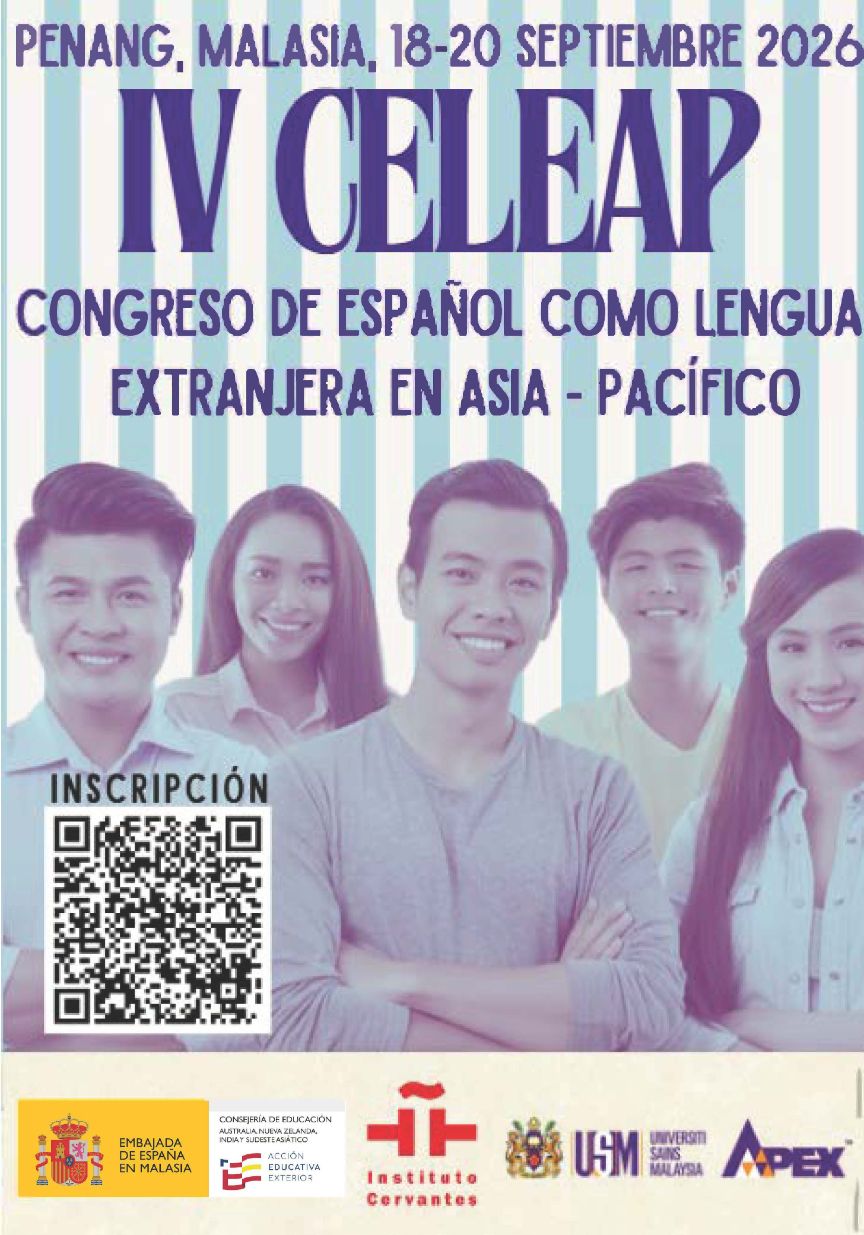
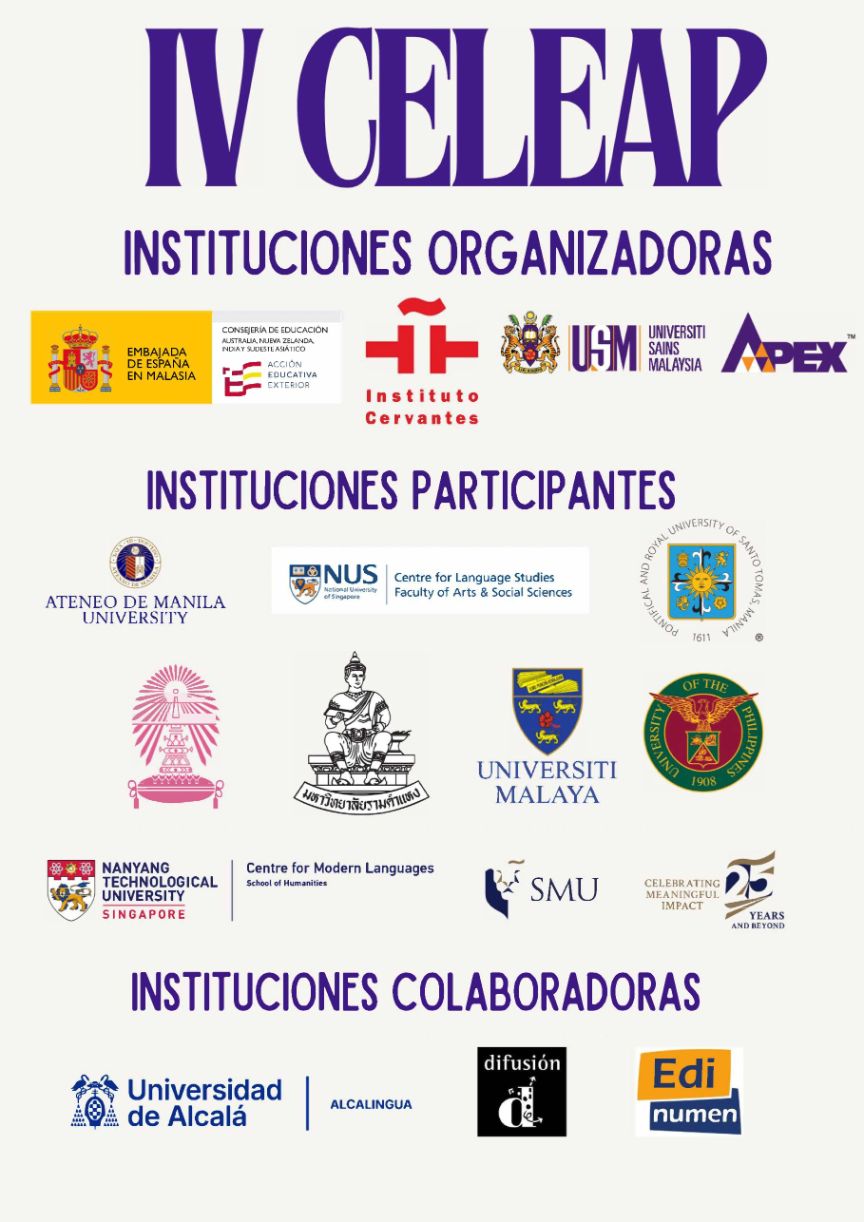
The 4th Conference on Teaching Spanish as a Foreign Language in Asia Pacific (CELEAP) will be held from 18 to 20 September 2026 at the Universiti Sains Malaysia (USM) in Penang, Malaysia. The conference will bring together teachers, researchers, and Spanish-language professionals from Southeast Asia and the AsiaPacific region to reflect on the teaching and learning of Spanish as a foreign language, share classroom practices, and discuss trends and challenges in the sector within a global context of digital transformation. This edition is organised by the Spanish Education Office in Australasia and its Offices in the Philippines and Thailand, the Instituto Cervantes in Manila, its extensions in the region, and Universiti Sains Malaysia (USM).
Registration
Rationale
Spanish, as a global language, faces new challenges and opportunities in an increasingly digitalised world. The theme of the congress, The Spanish Classroom in the Digital Age: Practices, Challenges, and Opportunities, invites reflection on the changes in the teaching and learning of Spanish as a foreign language (ELE) in the current context of technological transformation, virtual expansion, and growing demand for intercultural and digital competencies.
Objectives
The conference aims to provide a space for academic exchange, dialogue, and collaboration among teachers, researchers, and professionals in the field, showcasing innovative pedagogical approaches and current research that respond to the educational realities of the 21st century in the AsiaPacific region.
Thematic Areas
1. Innovative methodologies in ELE teaching
- New approaches and instructional design in the classroom
- Recovery and adaptation of traditional methods and practices
- Active methodologies: taskbased learning (TBL), gamification, flipped classroom, and other approaches adapted to the region
2. Technology and digital resources in Spanish teaching
- Use of Artificial Intelligence (AI)
- Pedagogical use of virtual platforms and social media
- Interactive tools and hybrid learning to enhance teaching and selflearning
3. Skills acquisition, assessment, and certification through new technologies
- Teaching of linguistic skills
- Formative and summative assessment: criteria and standards
- Preparation for official exams (DELE, SIELE) in Southeast Asia
4. Interculturality, identity, and ELE teaching in the digital age
- Development of intra and intercultural competence
- Cultural representations of the Spanish-speaking world
- Curricular adaptations and identity challenges of learners in Southeast Asia
5. Research in ELE and academic cooperation
- Acquisition studies, corpus analysis, and case studies
- Academic cooperation and the internationalisation of Spanish in the region
- Qualitative and quantitative approaches applied to the regional context
Partner Universities
Malaysia:
- Universiti Sains Malaysia (USM) – Host university of CELEAP 2026
- Universiti Malaya
Philippines:
- University of Santo Tomas
- University of the Philippines
- Ateneo de Manila University
Singapore:
- National University of Singapore (NUS)
- Nanyang Technological University (NTU)
- Singapore Management University (SMU)
Thailand:
- Chulalongkorn University
- Ramkhamhaeng University
The active involvement of these institutions plays a decisive role in strengthening the teaching, research, and promotion of Spanish within the university landscape of Southeast Asia and the AsiaPacific region.